Things I Wish Someone Had Told Me Before Travelling Solo After 60

When I first told people I was travelling solo to Europe, I can’t tell you how many times I heard:
“You’re travelling on your own? You’re so brave!”
I sometimes wondered whether brave was actually code for, “Has she completely lost the plot?”
Because travelling solo seemed to scare a lot of people.
And I understand why. For many women, the idea of arriving at an airport on your own, checking into a hotel alone, sitting down in a restaurant by yourself and navigating your way around a foreign country is completely outside their comfort zone.
But here’s what I’ve discovered.
Once you’ve done it once, you realise how easy it actually is.
I’m not saying there aren’t moments when you think, What am I doing here? There are. But you quickly discover that you are much more capable than you probably gave yourself credit for.
And there is something incredibly liberating about realising you don’t need someone else to travel.
I’ve now found a way of travelling that works brilliantly for me, so here are the things I wish someone had told me before I started travelling solo after 60.
Hotels really are your friend
When I’m travelling solo, I prefer a hotel.
It’s not necessarily about luxury. It’s about convenience, security and knowing there is someone around if I need help.
A good hotel reception or concierge can organise a taxi, book a restaurant, arrange a transfer or help when something inevitably goes slightly pear-shaped. There’s somewhere to leave your luggage if you arrive before check-in, and I always look for a lift rather than discovering after booking that my room is on the fourth floor and there are 73 stairs between me and my bed.
There’s also something reassuring about walking into a hotel at night and knowing there are other people around.
When you’re travelling alone, those little things make a difference.
Book the airport transfer
Yes. Yes. And yes.
After a long flight, when you’re dragging a suitcase, carrying a backpack and your brain feels like wet cement, the last thing I want to do is work out which train I need, where to change and whether the hotel is really only 500 metres from the station.
Because we all know what “500 metres” can mean in Europe.
It can mean cobblestones, stairs, a hill, a road you can’t cross and dragging your suitcase behind you while questioning every decision you’ve ever made.
Book the transfer.
It is money well spent, particularly when you’re arriving somewhere for the first time.
Eating alone gets easier
I’ll admit it. Sitting in a restaurant alone felt a little uncomfortable the first time.
Then I realised something very important.
Nobody really cares.
Most people are far too busy worrying about themselves.
I’ll take a book, my journal or my phone and catch up on photos or plan the next day. And if there’s a bar or counter, I’ll often sit there rather than at a table for two. It feels more casual and there’s a much better chance of striking up a conversation with someone sitting nearby.
And if nobody talks to me?
That’s okay too.
I get to eat exactly what I want, at exactly the time I want, without having to negotiate with anyone.
There are worse things.
Staying safe is mostly about being sensible
I don’t spend my travels worrying about being a woman on my own. I simply try to be aware of where I am and what is happening around me.
I’m not wandering down dark, deserted streets late at night, I know how I’m getting back to my hotel and if somewhere doesn’t feel right, I leave.
It’s really just common sense.
And I always let family at home know where I am. One of my little routines is sending a simple “All’s good” message each morning. It takes seconds and means they know I’ve survived another day of my adventures.
Meeting people takes a little effort

This is probably one of the harder parts of solo travel.
People travelling as couples or with friends naturally tend to stick together. That’s not unfriendly; they’re simply travelling with the people they came with.
So if you want company, sometimes you have to make the first move.
Organised tours make this much easier. On my tours, there have almost always been other solo travellers, and I’ve made some great friends that way.
You just have to be approachable. Say hello. Sit beside someone at lunch. Accept an invitation for a drink. Suggest dinner.
And if you’re lucky, some of those travel friendships continue long after the tour finishes.
Your luggage can make or break your day
After hauling luggage around Europe, I have very definite opinions about this.
Your suitcase needs good multidirectional wheels. Your backpack needs to be comfortable. And your crossbody bag needs to be secure and big enough for the essentials without becoming a portable handbag warehouse.
My backpack is where I keep everything I might need during a flight — technology, headphones, books, eye mask, a warm scarf and whatever else I’ve decided is absolutely essential at the time.
My crossbody bag is much simpler: passport, wallet, phone, notepad and pen.
Keeping things organised means I’m not standing at an airport security desk emptying half my life onto the conveyor belt.
Technology is your friend
There are a few things I wouldn’t travel without now.
WhatsApp is invaluable. Drivers, tour companies, hotels and restaurants all seem to use it, and it makes staying in contact incredibly easy.
I also travel with two power banks because using your phone for maps, photos, videos and everything else can drain the battery surprisingly quickly. Add a good pair of headphones and a travel adaptor and you’re pretty much set.
And don’t forget audiobooks.
They take up no room in your luggage, you can borrow them from many local libraries, or download them through services such as Audible or Spotify. They are particularly useful on long flights, train journeys or those moments when you’ve decided you’ve walked quite enough for one day.
You don’t have to do everything

This one took me a while to learn.
When you’re somewhere new, there is a temptation to see absolutely everything.
Every museum. Every church. Every famous building. Every viewpoint.
And suddenly your holiday has become an endurance event.
You don’t have to climb the tower. You don’t have to visit six museums in one day. You don’t have to walk 20,000 steps because your travel app tells you that you can.
If something doesn’t interest you, don’t do it.
That’s one of the great advantages of travelling alone. You get to decide.
Want to sit in a café for an hour watching the world go by? Do it.
Want to go back to the hotel for a nap? Do it.
Want to change your plans completely because you’ve spotted something interesting down a side street? Absolutely.
Nobody is waiting for you to make a decision.
My perfect way to travel
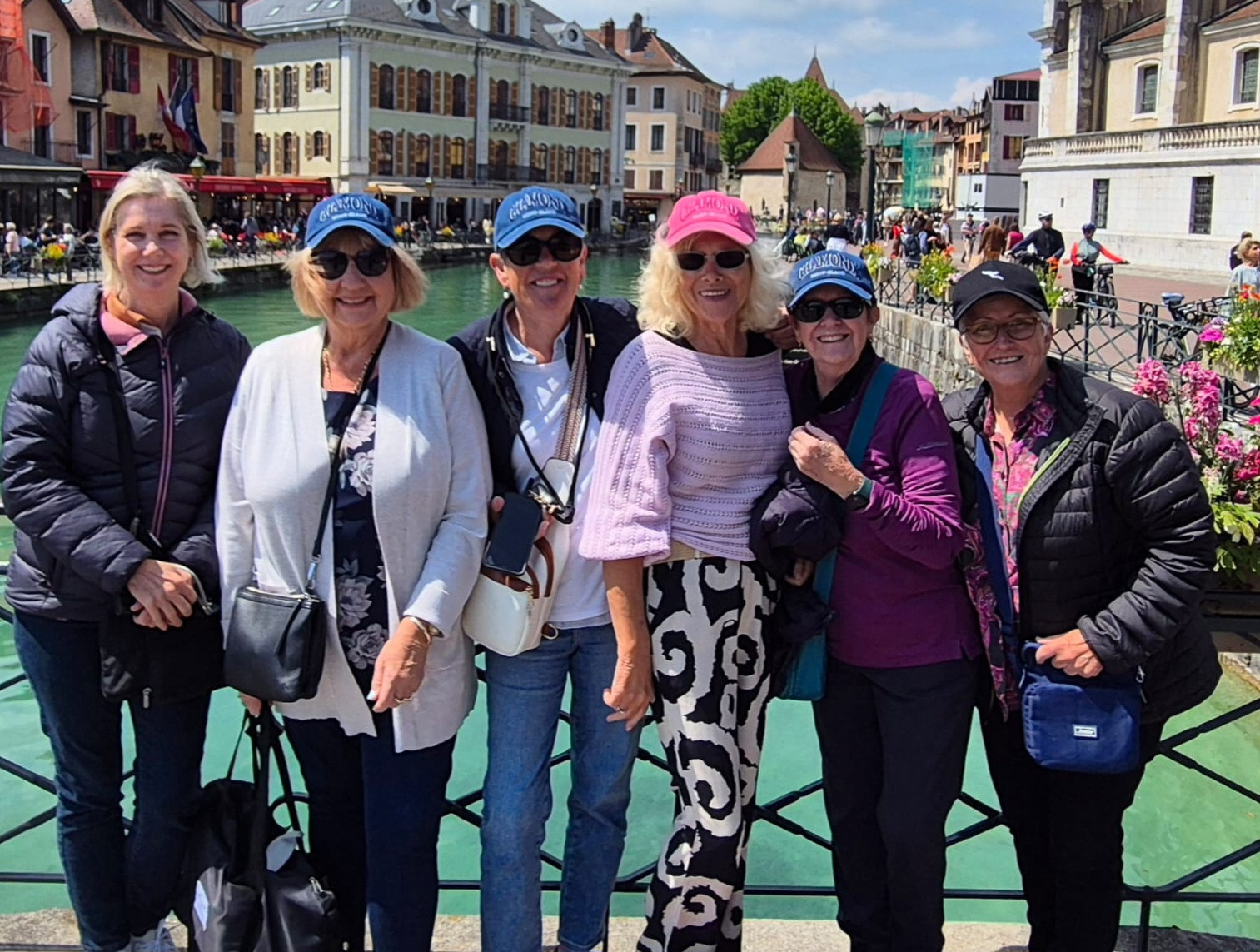
I’ve actually found a combination of solo travel and small-group touring that works perfectly for me.
I might spend four or five days exploring a city on my own, then join a seven- to ten-day Back-Roads tour.
The tour takes care of the accommodation, transport, attractions, lunches and much of the organising. I don’t have to decide where we’re going or what we’re doing every day.
And I love that.
Every day is a new surprise.
When the tour finishes, I go solo again. I might spend another week making my way to the starting point of the next tour, then join another one before heading off somewhere else on my own.
It gives me the best of both worlds.
I get my own space when I want it. I don’t have to consult anyone about where I’m going or what I’m doing. I can disappear down a random street, spend three hours photographing a building or change my plans completely.
But I also get company, interesting people to talk to and someone to “play” with when I feel like it.
For me, it’s the perfect balance.
So, are you brave enough?
I’m not sure brave is the right word.
I didn’t suddenly become fearless. I just decided to give it a go.
And once you’ve done that first trip, something changes.
You realise you can find your hotel. You can navigate an airport. You can sit in a restaurant alone. You can meet people. You can deal with the occasional problem. And you can have an absolutely brilliant time.
So if you’ve been thinking about travelling solo but keep telling yourself you’re too old, too nervous or not confident enough, perhaps stop thinking about the whole trip.
Just think about the first step.
You don’t need to be fearless. You just need to be willing to give it a go.
Travelling solo after 60 isn’t about proving anything. It’s about discovering that your world doesn’t have to get smaller just because you’ve got older.
In fact, it might just get bigger.
And if all else fails…

There’s always the hotel bar.


Comments